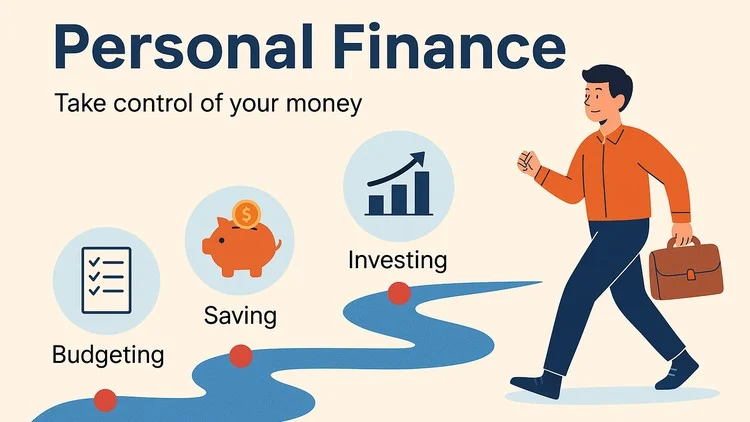
Personal finance is not about becoming rich overnight. It is about learning how to control your money instead of letting your money control you. Many people feel constant stress about income, bills, and the future simply because they were never taught the basics of how money works in daily life. When you understand personal finance, you gain clarity, confidence, and long-term security.
This article explains the essential foundations that allow anyone—regardless of income level—to begin building financial stability.
What Personal Finance Really Means
Personal finance is the management of your income, expenses, savings, investments, and protection against financial risk. It includes:
-
How you earn money
-
How you spend money
-
How you save money
-
How you borrow money
-
How you protect yourself from emergencies
It is not about perfection. It is about intentional decisions instead of automatic habits.
The Power of Knowing Your Numbers
The first step in controlling your money is knowing exactly where it goes. Many people feel broke not because they earn too little, but because they do not track their spending. Small daily purchases silently consume income over time.
Tracking your finances gives you:
-
Awareness of wasteful habits
-
Control over impulse spending
-
Clear limits for essential needs
-
A realistic view of your financial position
When you know your numbers, you replace guesswork with certainty.
Building a Simple Budget That Works
A budget is not a punishment—it is a spending plan. It tells your money where to go instead of wondering where it went.
A simple budget usually includes:
-
Fixed expenses: rent, utilities, insurance
-
Variable expenses: groceries, transport, entertainment
-
Savings goals
-
Debt payments
The goal is balance, not deprivation. A good budget allows enjoyment while still protecting the future.
Why Saving Must Come Before Spending
Many people try to save what is “left over” at the end of the month. The problem is that nothing is usually left. Successful saving works in reverse—save first, spend what remains.
Savings provide:
-
Emergency protection
-
Freedom from constant stress
-
Protection against job loss
-
The ability to handle unexpected expenses without debt
Even small, consistent savings habits create powerful long-term results.
The Role of Emergency Funds
An emergency fund is not for vacations, shopping, or lifestyle upgrades. It is for protection against:
-
Medical emergencies
-
Job loss
-
Car repairs
-
Home repairs
-
Urgent family needs
Without emergency savings, people are forced to rely on credit cards or high-interest loans during crises. This traps them in debt that could have been avoided.
A basic emergency fund goal is three to six months of essential expenses.
Understanding Income vs. Lifestyle
One of the most dangerous financial patterns is lifestyle inflation—the habit of increasing spending every time income rises. Raises, bonuses, and new jobs can feel like solutions to financial stress, but without disciplined spending, financial pressure often returns quickly.
True financial progress comes from:
-
Keeping expenses stable as income grows
-
Using raises to strengthen savings
-
Eliminating high-interest debt
-
Investing in long-term stability
Higher income with uncontrolled spending still leads to financial instability.
How Personal Finance Protects Your Future
Personal finance is not only about today—it is about the future version of you. Poor financial decisions today create long-term consequences:
-
High-interest debt
-
Damaged credit
-
Missed opportunities
-
Insecurity during emergencies
-
Delayed retirement
Strong financial habits create the opposite: options, freedom, security, and peace of mind.
The Emotional Side of Money
Money is rarely just about numbers. It is tied to:
-
Fear
-
Pride
-
Stress
-
Confidence
-
Comparison
-
Guilt
Understanding your emotional relationship with money is as important as understanding your bank balance. Financial education replaces emotional reactions with rational decisions.
Why Personal Finance Education Matters
Without financial education, people often:
-
Rely on debt for normal life expenses
-
Live paycheck to paycheck
-
Fall into predatory lending
-
Avoid planning for the future
-
Feel constant financial anxiety
Education is the tool that breaks these cycles.
Final Thoughts
Personal finance is not about wealth—it is about control. You don’t need a perfect income to build stability. You need clear awareness, simple systems, and consistent discipline. When you control your money, you control your stress, your choices, and your future.